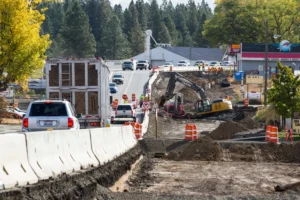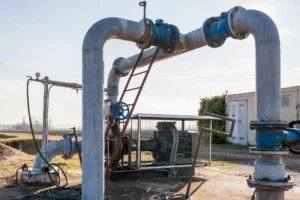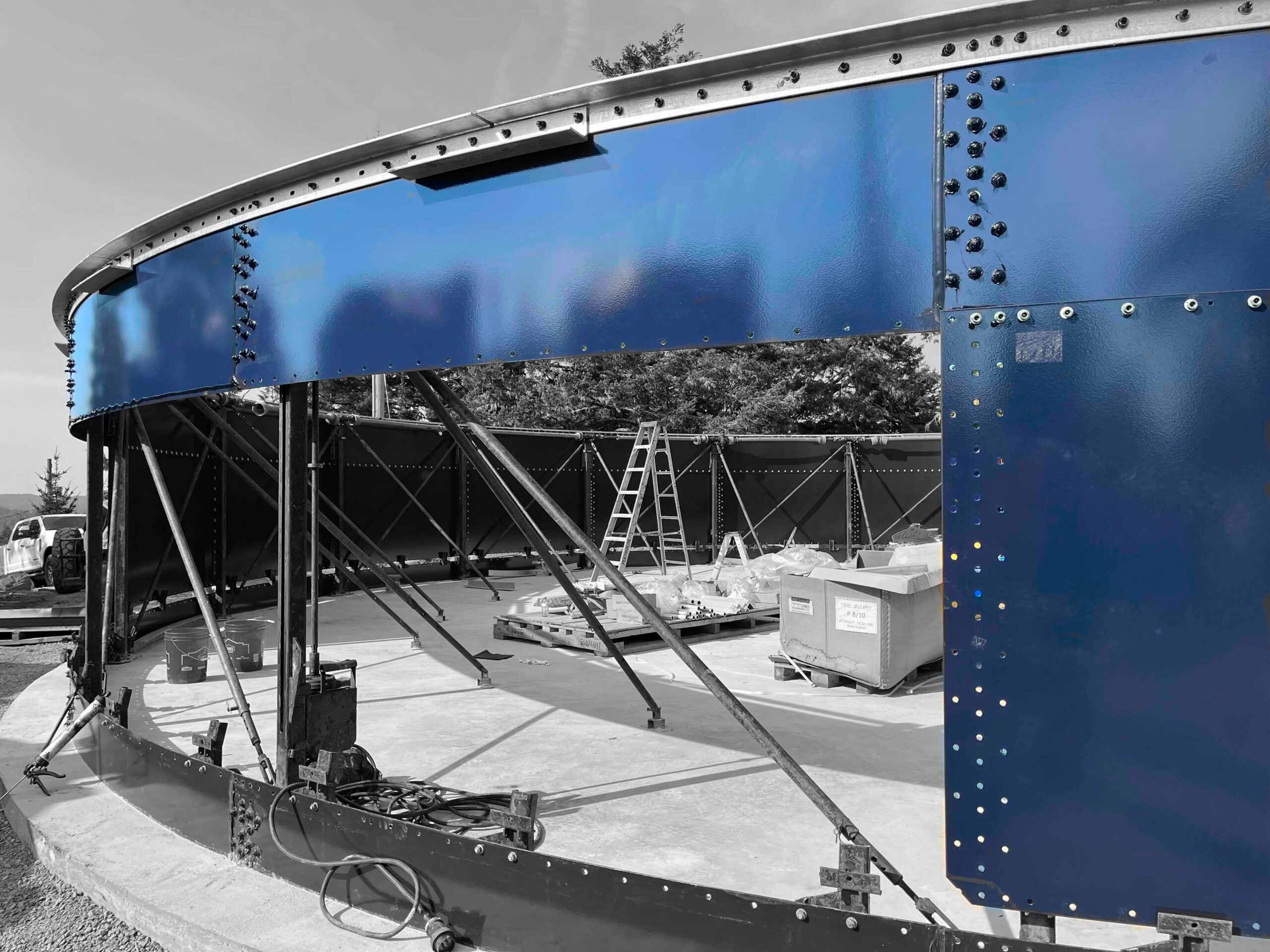
A strong design-build RFP does more than request pricing. It gives qualified teams the information they need to understand the owner’s objectives, evaluate project risk, propose a practical solution, and plan safe, high-quality execution.
At Industra, we see the best results when owners treat the RFP as an early project delivery tool. This is especially important for municipal utilities, First Nations infrastructure, industrial upgrades, water and wastewater facilities, and projects with complex logistics. As a multi-discipline, self-perform contractor with in-house engineering and construction services, we know that clarity at procurement often leads to better planning in the field.
Define The Project Purpose And Required Outcomes
Design-build works best when the owner clearly defines what the project must achieve. Rather than prescribing every detail, the RFP should identify the required performance outcomes and constraints.
For example, an RFP for a lift station, reservoir, treatment facility, or process upgrade should describe capacity requirements, operating needs, redundancy expectations, regulatory drivers, and future expansion considerations. This allows the design-builder to align engineering, procurement, construction, commissioning, and quality control from the start.
Owners should include:
- Project background and business case
- Required capacity, performance, and service life
- Applicable permits and approvals
- Existing operating issues
- Maintenance and access requirements
- Environmental and community priorities
Our EPC Design-Build services support this integrated approach by bringing design and construction planning together early.
Provide Reliable Existing Information
A design-build team can manage uncertainty, but it should not be forced to guess. The RFP should include all available information so proponents can price and plan the work responsibly.
Useful background information may include:
- Geotechnical reports
- Survey data
- Record drawings
- Utility locates
- Environmental assessments
- Flow monitoring
- Asset condition reports
- Process data
- Hazardous materials information
If information is missing, say so clearly. Transparent risk allocation supports better proposals and reduces avoidable changes after award.
This is particularly important for projects involving civil, mechanical, electrical, and process systems. Our Process Mechanical and Civil Construction capabilities help owners address these interfaces during planning and delivery.
Clarify Scope, Interfaces, And Responsibilities
A good RFP defines who is responsible for each major scope item. This is essential when construction takes place around active utilities, operating plants, public roads, industrial systems, or existing buildings.
Owners should clearly assign responsibility for:
- Design disciplines and professional seals
- Permitting support
- Temporary works
- Bypass pumping or temporary treatment
- Utility coordination
- Equipment procurement
- Commissioning and operator training
- Record drawings and closeout documents
- Coordination with regulators and operations staff
Design-build provides single-source accountability, but the scope still needs to be well defined. The clearer the owner is at the RFP stage, the stronger the project controls will be during execution.
Set Safety Expectations Early
Safety should be built into the RFP, not added later. Owners should require a project-specific safety approach that reflects the actual work conditions.
For infrastructure projects, this may include excavation, confined space entry, lifting, electrical isolation, traffic control, chemical systems, and work around operating facilities. For remote or challenging sites, it may also include travel planning, emergency response, weather exposure, communication protocols, and fatigue management.
Our safety culture is grounded in Zero Harm 365 and the belief that safety is priority one. Owners can strengthen their RFP by asking proponents to address:
- Site-specific hazard identification
- Emergency response planning
- Subcontractor safety management
- Training and competency requirements
- Traffic, lifting, excavation, and confined space controls
- Safety reporting and communication
Owners can also refer to our Safety approach when considering what safety-first planning should look like.
Include Quality Management Requirements
Quality requirements should be specific enough to protect long-term asset performance. This is especially important for municipal pump stations, water and wastewater treatment systems, industrial upgrades, fuel systems, and process mechanical work.
A strong RFP should ask proponents to explain how they will manage quality from design through closeout. This may include:
- Inspection and test plans
- Shop drawing and submittal review
- Equipment data management
- Concrete, coating, welding, and mechanical procedures
- Commissioning plans
- Deficiency tracking
- Turnover documentation
- Warranty and maintenance information
Our Quality Assurance program reflects the importance of quality at every step, from early planning to final turnover.
Address Schedule, Access, And Operational Constraints
Owners should include required milestones, but they should also explain why those dates matter. A schedule tied to a funding deadline, permit condition, shutdown window, seasonal constraint, or community requirement needs to be understood early.
The RFP should identify:
- Required completion dates
- Shutdown windows
- Permit or funding deadlines
- Seasonal restrictions
- Site access limitations
- Public communication needs
- Commissioning and training periods
- Long-lead equipment requirements
For projects in operating environments, schedule planning must also account for continuity of service. Our broader Construction Services support coordinated planning between field execution, operations, and project controls.
Require A Practical Logistics Plan
Logistics can be one of the biggest risks in infrastructure construction. This is true for remote sites, but also for urban sites with limited laydown, restricted access, traffic impacts, or active operations.
A strong RFP should ask proponents to describe how labour, equipment, materials, temporary facilities, and critical supplies will be managed. The plan should cover:
- Mobilization and demobilization
- Staging and laydown
- Material delivery
- Temporary power, heat, and water
- Long-lead procurement
- Equipment access
- Weather and access contingencies
For industrial work, logistics may also include shutdown coordination, hazardous area controls, and production continuity.
Reflect Community And Stakeholder Priorities
Infrastructure projects affect communities. For municipalities, First Nations, public agencies, and institutional owners, the RFP should explain stakeholder expectations clearly.
This may include public communication, local employment goals, training opportunities, environmental protection measures, cultural considerations, site access protocols, and coordination with community leadership.
Our work across industrial, First Nations, municipal, and institutional markets is grounded in respectful relationships and practical communication. Owners can also connect stakeholder requirements to broader community commitments such as Industra Cares.
Use Evaluation Criteria That Match Project Risk
Design-build should not be evaluated on price alone. A low bid may not provide best value if the project involves technical complexity, safety risk, commissioning requirements, or difficult logistics.
Evaluation criteria should consider:
- Technical approach
- Relevant project experience
- Safety performance
- Quality management
- Schedule and logistics plan
- Design team qualifications
- Self-perform capability
- Understanding of project risks
- Community and stakeholder approach
- Lifecycle value
Make Submission Requirements Clear
The RFP should make it easy for teams to respond consistently. Owners should define page limits, pricing forms, schedule requirements, interview expectations, required attachments, and evaluation weighting.
A clear submission structure helps evaluators compare proposals fairly. It also helps proponents focus on the information that matters most.
Build The RFP Around Clarity And Accountability
A strong design-build RFP creates a better foundation for the entire project. It clarifies objectives, reduces ambiguity, supports safety-first planning, improves risk management, and helps owners receive complete, comparable proposals.
We bring in-house engineering, multi-discipline self-perform construction, and EPC/design-build experience across municipal, industrial, institutional, civil, mechanical, water, wastewater, and infrastructure projects. If your team is preparing a design-build procurement, contact us to discuss how early planning and integrated delivery can support a stronger project outcome.