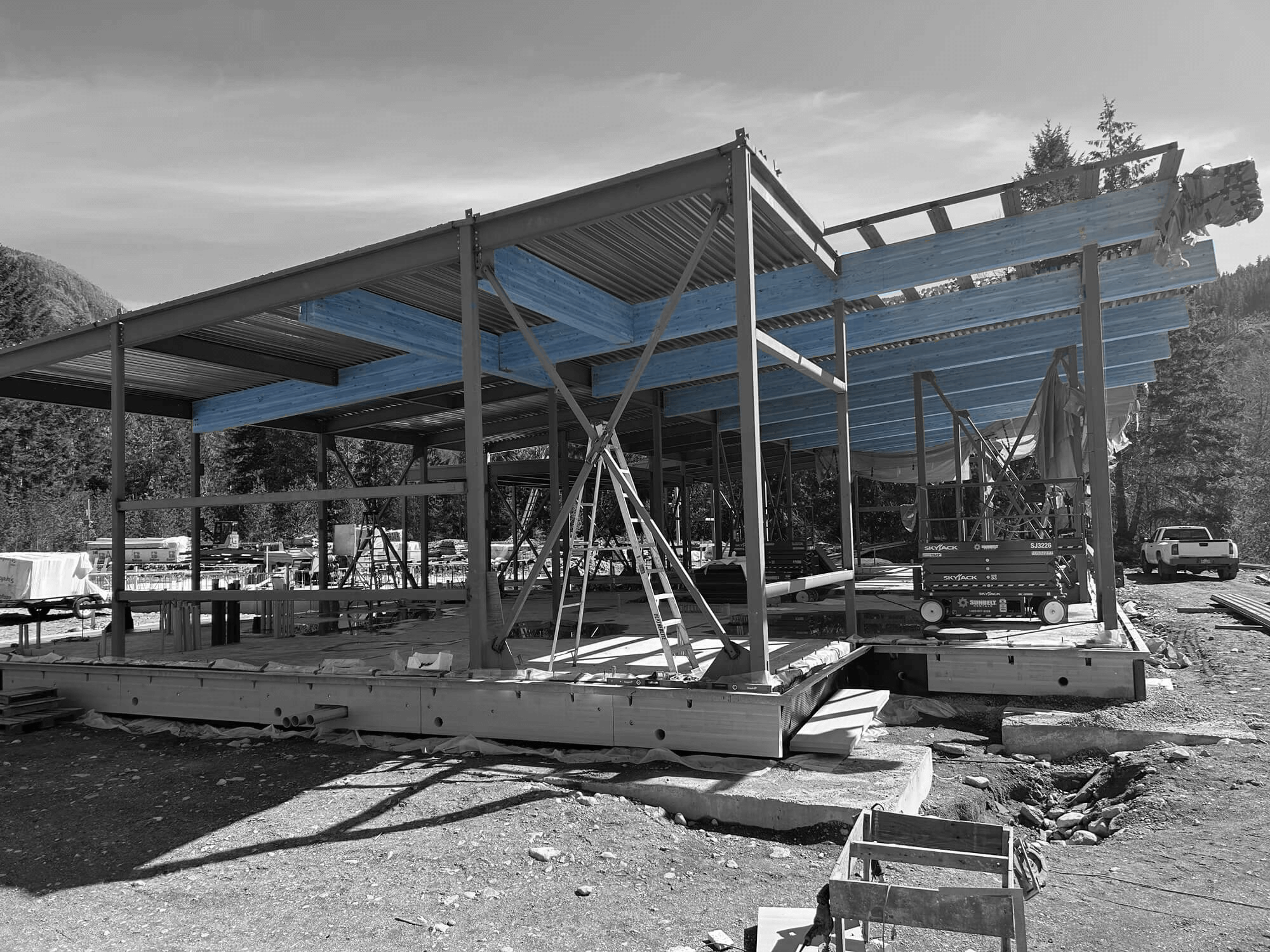
Active construction rarely unfolds exactly as shown on tender drawings. Existing conditions differ from records. Underground conflicts appear during excavation. Equipment lead times shift. Operators request practical adjustments. Environmental or access constraints change sequencing. On complex infrastructure work, the real question is not whether decisions will be needed. It is how quickly and responsibly those decisions can be made.
At Industra, we see in-house engineering as a major advantage during active construction because it keeps technical and field teams aligned when time matters most. Instead of sending questions through multiple outside parties and waiting for answers to cycle back, integrated engineering and construction teams can assess issues quickly, confirm options, and move forward with better coordination.
This is one reason design-build delivery continues to add value on complex municipal, industrial, institutional, and remote projects. When engineering stays close to construction, decisions are faster, risks are easier to manage, and quality is easier to protect.
Why decision speed matters once construction is underway
During active construction, delays are often driven by unanswered technical questions rather than physical production alone. A crew may be ready to install pipe, set equipment, form a structure, or proceed with a tie-in, but work cannot continue until a design or field issue is resolved.
These delays affect more than schedule. Slow decisions can also create:
- Extended equipment standby time
- Resequencing that reduces field productivity
- Higher exposure to weather and seasonal constraints
- Added risk around temporary works and site access
- Coordination challenges between trades, suppliers, and inspectors
On infrastructure projects, each day of uncertainty can ripple through procurement, inspections, commissioning, and stakeholder communication. That is especially true on water and wastewater projects, industrial upgrades, and remote work where sequencing windows are tight and shutdown periods are limited.
We explored the integrated value of this model in our earlier post, Why In-House Engineering Matters on Complex Design-Build Projects. During active construction, that advantage becomes even more visible.
How in-house engineering changes the pace of field decisions
When engineering is internal to the project delivery team, answers do not need to travel through disconnected organizations before action can happen. The engineers already understand the project objectives, the construction plan, the procurement strategy, and the site realities.
That improves decision-making in several ways.
1. Faster review of real site conditions
Field conditions often reveal details that were not fully visible during preconstruction. Survey information may differ slightly from assumptions. Existing infrastructure may be offset from record drawings. Ground conditions may affect excavation support, pipe alignment, or foundation details.
With in-house engineers engaged alongside project managers, superintendents, and self-perform crews, those conditions can be reviewed quickly and translated into practical solutions. The focus is not just on technical compliance. It is also on constructability, safety, schedule impact, and long-term performance.
This kind of coordination is particularly important on complex civil work and utility installations, where field realities directly affect execution. Our civil construction services teams see this regularly on buried infrastructure, structural concrete, and site development scopes.
2. Better constructability decisions in real time
A design solution on paper still needs to work safely and efficiently in the field. Internal collaboration between engineering and construction allows the team to assess whether an option is practical before it reaches the crew.
That includes questions such as:
- Can the detail be installed with available access and equipment?
- Does it affect temporary works, bypass systems, or traffic control?
- Will it interfere with another trade or procurement package?
- Does it maintain quality and long-term maintainability?
This is one of the reasons integrated teams can reduce rework. Decisions are tested against real construction conditions before they become field instructions.
Our post on How Design-Build Streamlines Institutional Building Upgrades highlights how this kind of collaboration helps maintain momentum on active sites where phasing, occupancy, and operational continuity all matter.
3. Quicker response to procurement and equipment changes
Construction decisions are often tied to what can actually be procured. A specified component may have a lead time that no longer fits the schedule. A manufacturer may revise dimensions. An alternate arrangement may better support maintenance access or startup requirements.
When engineering, procurement, and construction are closely connected, these adjustments can be evaluated faster. The project team can compare approved alternatives, confirm impacts to connected systems, and keep fabrication or installation moving.
That level of coordination is a core strength of EPC and construction services, especially when projects involve process mechanical systems, structural interfaces, and multiple long-lead items.
Where faster decisions create the most value
Not every project issue carries the same level of urgency. In our experience, in-house engineering delivers the greatest value in the following situations.
Live infrastructure and operational environments
Many upgrades occur inside active facilities where owners need services maintained during construction. Water, wastewater, and industrial sites often require tie-ins, shutdowns, bypass planning, and staged commissioning. When conditions change, the response has to be technically sound and operationally realistic.
That is why integrated teams are so important on projects like the ones discussed in How Industrial Facility Upgrades Can Be Delivered Without Disrupting Operations.
Remote and northern projects
On remote work, delayed decisions can have outsized consequences. Missed installation windows, material resupply challenges, weather exposure, and limited site access all increase the cost of waiting. Fast, well-supported technical direction is essential when crews are working within narrow logistical windows.
Our experience in remote Arctic construction continues to show that engineering integration is not just convenient. It is a practical requirement for keeping work moving in challenging environments.
Safety-critical activities
No decision should move faster at the expense of safety. At Industra, safety is priority one, and our Zero Harm 365 approach applies to design review as much as field execution. In-house engineering helps by bringing hazards, sequencing, temporary conditions, and worker access into the same conversation as design intent.
That matters on confined-space work, deep excavations, equipment setting, energized environments, and temporary bypass systems. Our article on Key Safety Considerations for Water and Wastewater Construction Projects outlines why planning and communication are essential before work proceeds.
In-house engineering supports more than speed
Faster decisions are valuable, but speed alone is not the goal. The real benefit is better project control.
When engineering is embedded within the delivery team, decisions are more likely to reflect the full project picture:
- Technical requirements
- Field productivity
- Quality control
- Environmental protection
- Client objectives
- Commissioning needs
- Long-term asset performance
That broader view helps prevent local fixes that create downstream problems. It also supports a more accountable delivery model, because the same integrated team is responsible for both the solution and its execution.
This approach aligns closely with our focus on safety and quality. Construction decisions made under pressure still need to be documented, reviewed, and executed correctly the first time.
What project owners should look for
For owners evaluating delivery partners, the question is not simply whether engineering is available. It is whether engineering is positioned to support the work while construction is active.
A strong in-house engineering model should provide:
Direct communication with field leadership
Engineers should be connected to superintendents, project managers, and quality teams, not separated from them.
Practical understanding of construction means and methods
Good decisions need technical rigour, but they also need constructability.
Alignment with self-perform execution
When engineering understands how the work will actually be built, details are more likely to support schedule and field efficiency.
Responsiveness during live issues
Decision support must keep pace with the realities of active construction, especially on phased, remote, or operationally sensitive projects.
Clear accountability
Owners benefit when responsibility for design coordination and construction execution is unified instead of fragmented.
These same principles support better outcomes across our services, from municipal infrastructure to industrial upgrades and institutional work.
Building momentum through integration
Construction projects move best when decisions are informed, timely, and grounded in field reality. In-house engineering helps make that possible by reducing communication gaps, improving constructability review, and giving project teams faster access to technical direction when site conditions change.
At Industra, we see this as part of being a client-focused, performance-driven construction partner. Integrated engineering does not replace planning. It strengthens it during the moments that matter most, when active construction requires quick answers, disciplined review, and steady coordination across the whole team.
For owners delivering complex infrastructure, the benefit is straightforward: fewer delays tied to unresolved technical issues, better alignment between design and field execution, and stronger control over safety, quality, and schedule.
If you are planning a design-build or EPC project and want a delivery team that can respond quickly during active construction, contact Industra to discuss your project.