Environmental protection is no longer a standalone task addressed only during permitting or early design. For modern infrastructure projects across Canada, environmental protection plans must be actively integrated into day-to-day construction activities. Whether a project involves water and wastewater infrastructure, industrial upgrades, marine works, or institutional facilities, owners and regulators increasingly expect environmental commitments to be visible, measurable, and enforced throughout construction.
For contractors working in complex, remote, or environmentally sensitive environments, the challenge is clear. Environmental protection plans must function in real time on busy construction sites without creating safety risks, schedule delays, or unnecessary cost escalation. When done properly, environmental planning strengthens project execution rather than constraining it.
This article explains how environmental protection plans are successfully integrated into active construction sites, what owners should expect from their contractor, and how a design-build or EPC approach supports practical environmental stewardship from mobilization through closeout.
Why Environmental Protection Plans Matter During Construction
Environmental protection plans are more than regulatory documents. They are working tools that guide how construction activities interact with land, water, air, and surrounding communities.
On active construction sites, environmental risks can include:
- Sediment runoff into watercourses
- Disturbance of fish habitat or wetlands
- Fuel and hydraulic fluid spills
- Dust, noise, and vibration impacts
- Improper material handling or waste disposal
Left unmanaged, these risks can lead to regulatory non-compliance, work stoppages, reputational damage, and long-term environmental harm. For municipalities, First Nations, industrial owners, and government agencies, environmental incidents can undermine public trust and delay critical infrastructure delivery.
This is why experienced EPC and design-build contractors integrate environmental controls directly into construction planning, site logistics, safety processes, and quality management systems. Environmental protection becomes part of how work is executed, not an afterthought.
Environmental Protection Starts at the Planning Stage
Successful environmental protection on active construction sites begins well before the first piece of equipment arrives.
During early project phases, experienced contractors work with owners, regulators, and environmental consultants to translate permit conditions into practical, site-specific controls. This planning phase is where environmental commitments are aligned with construction methodology.
Key planning considerations include:
- Site access and laydown locations
- Equipment selection and refueling strategies
- Temporary works design
- Sequencing of earthworks and in-water activities
- Seasonal constraints and weather exposure
- Emergency response procedures
In design-build and EPC delivery models, this early integration is particularly effective. Engineering and construction teams work together to design systems that minimize environmental risk while maintaining constructability. This approach aligns closely with the principles discussed in an earlier blog on Why Water and Wastewater Projects Deserve a Design-Build Approach, where early coordination reduces downstream risk and improves outcomes.
Environmental protection plans that are developed in isolation often fail when construction begins. Integrated planning ensures environmental controls are realistic, enforceable, and compatible with site conditions.
Making Environmental Protection Part of Site Mobilization
Once construction begins, environmental protection plans must be embedded into site mobilization activities. This is where many projects succeed or struggle.
Effective site mobilization includes:
- Environmental orientation for all site personnel
- Clear delineation of environmentally sensitive areas
- Installation of erosion and sediment controls before earthworks
- Designated fueling, maintenance, and washdown zones
- Spill kits placed at strategic locations
- Waste segregation and disposal systems
At this stage, environmental requirements are communicated with the same clarity and emphasis as safety expectations. On well-managed sites, environmental controls are included in daily hazard assessments, toolbox talks, and work planning meetings.
This integration mirrors the safety-first philosophy outlined in our Safety & Quality approach and reinforced through the Zero Harm 365 program. Environmental protection and safety are closely linked. Poor environmental controls often introduce safety risks, while well-planned controls improve site order, access, and hazard awareness.
Assigning Clear Environmental Responsibility on Site
Environmental protection plans are only effective when responsibility is clearly defined.
On active construction sites, successful contractors assign environmental accountability at multiple levels:
- Project managers ensure environmental commitments are resourced and scheduled
- Site superintendents integrate controls into daily work sequencing
- Environmental coordinators monitor compliance and reporting
- Forepersons enforce controls at the task level
- Workers are empowered to stop work if environmental risks are identified
This layered responsibility ensures environmental protection does not rely on a single individual or role. It becomes a shared obligation across the project team.
Integrating Environmental Controls into Daily Construction Activities
Active construction sites are dynamic environments. Weather changes, schedules shift, and unexpected conditions arise. Environmental protection plans must be flexible enough to adapt without compromising compliance.
Practical integration includes:
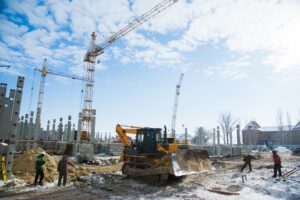
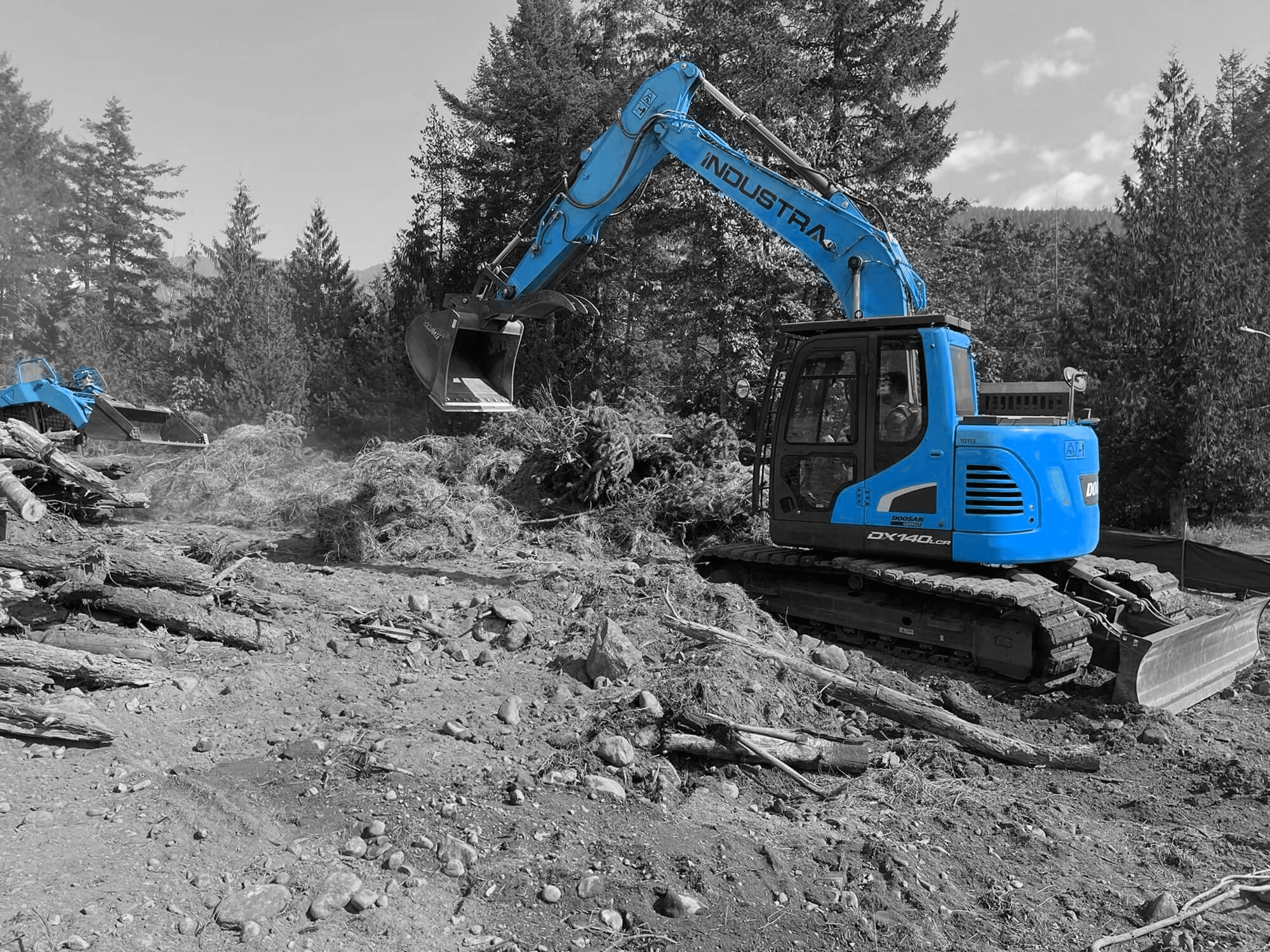
Earthworks and Excavation
- Phased excavation to limit exposed soils
- Real-time inspection of erosion controls
- Stockpile management to prevent runoff
- Adjustments during heavy rainfall or thaw conditions
Concrete and Civil Works
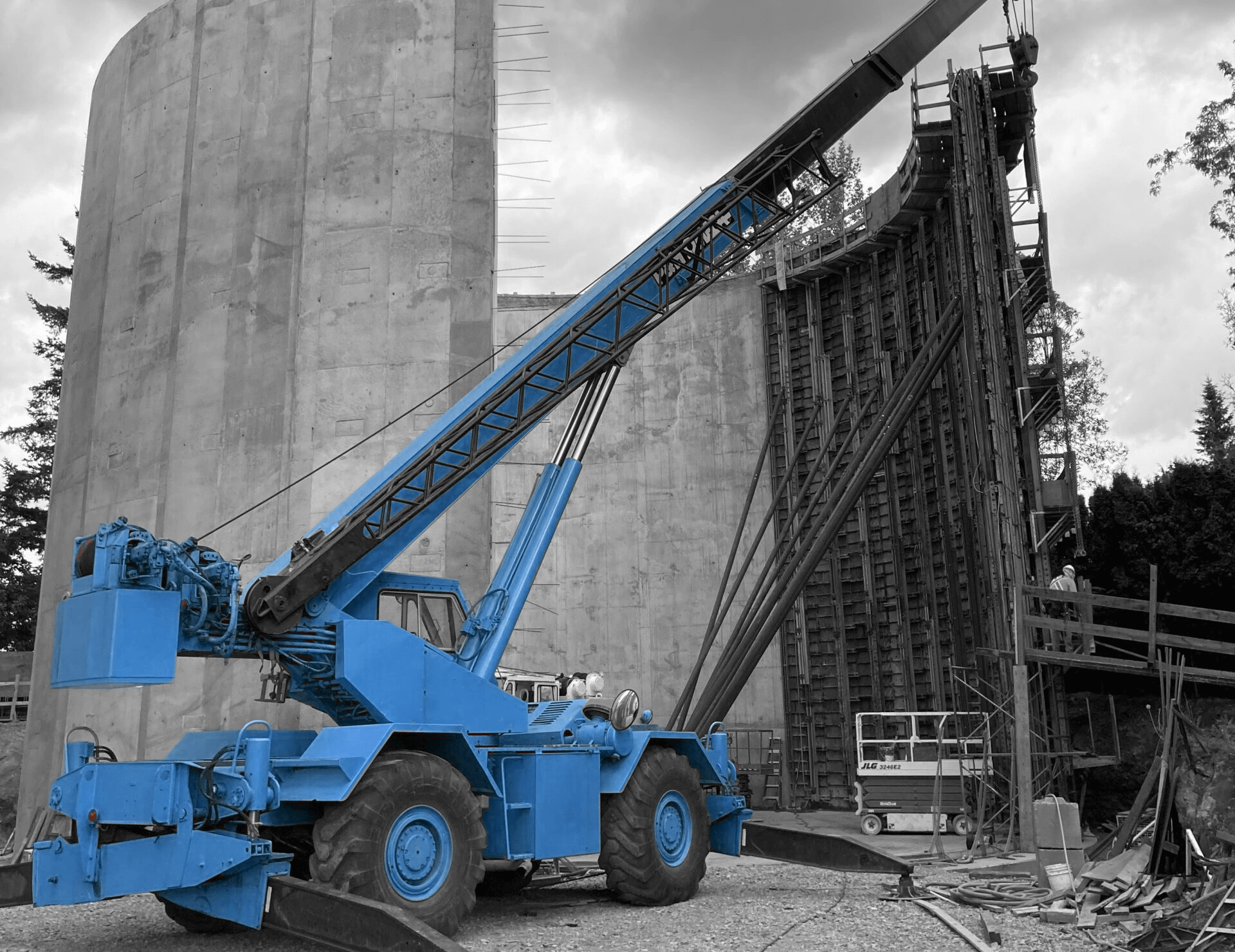
- Controlled washout areas
- Protection of storm drains and catch basins
- Monitoring of curing water discharge
- Dust suppression measures
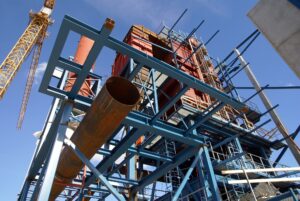
Mechanical and Process Installations
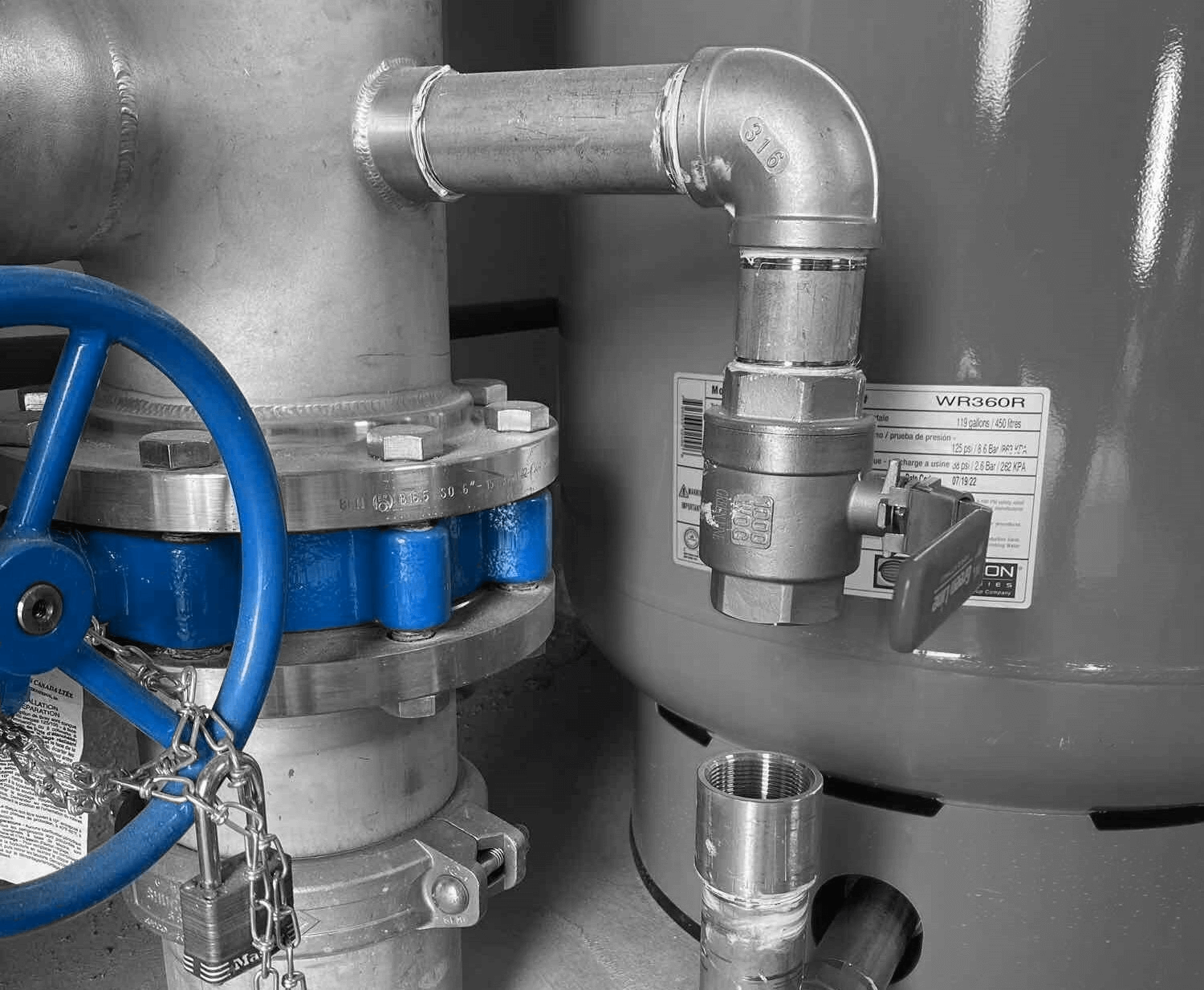
- Proper handling of lubricants and chemicals
- Secondary containment for storage areas
- Controlled commissioning and testing procedures
Marine and In-Water Construction
- Turbidity monitoring
- Timing windows to protect fish habitat
- Isolation of work areas
- Emergency spill response readiness
These measures are not theoretical. They are implemented daily on well-managed sites delivering water treatment plant construction, wastewater treatment upgrades, and industrial construction services across Canada.
Training and Communication Are Critical
Environmental protection plans fail most often due to poor communication rather than poor intent.
Construction sites involve diverse workforces, subcontractors, and suppliers. Everyone must understand environmental expectations in plain language.
Effective communication strategies include:
- Site-specific environmental orientation sessions
- Visual signage and maps
- Daily toolbox talks that include environmental topics
- Pre-task planning that addresses environmental risks
- Regular site walks with environmental staff
Monitoring, Inspection, and Continuous Improvement
Environmental protection on active construction sites requires ongoing monitoring.
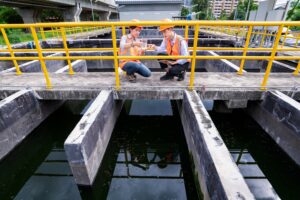
Inspections are conducted to verify:
- Controls are installed correctly
- Measures remain effective over time
- Weather events have not compromised protections
- Work activities align with permit conditions
When deficiencies are identified, corrective actions are implemented immediately. This continuous improvement mindset reflects Industra’s quality management philosophy.
Documentation also plays a critical role. Inspection records, incident reports, and corrective action logs demonstrate due diligence and support transparent communication with regulators and owners.
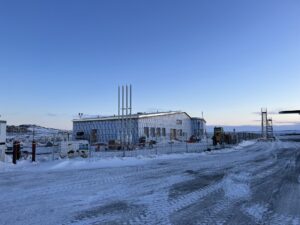
Managing Environmental Protection in Remote and Northern Projects
Remote and northern construction projects introduce additional environmental complexities.
Limited access, sensitive ecosystems, and short construction seasons require heightened planning and discipline. Environmental protection plans must account for:
- Barge and winter road logistics
- Limited emergency response resources
- Fuel transport and storage challenges
- Extreme weather conditions
- Cultural and land use considerations
In these environments, environmental protection is inseparable from logistics planning. Experienced contractors integrate environmental protection into every logistical decision, ensuring materials, equipment, and personnel movements do not create unintended impacts.
Working Respectfully with First Nations and Local Communities
Environmental protection plans are also about respect for the land and the people who depend on it.
On First Nations infrastructure projects, environmental stewardship is often deeply connected to cultural values, traditional knowledge, and long-term land use. Successful contractors engage early, listen carefully, and incorporate community input into environmental planning and execution.
The Role of Design-Build and EPC in Environmental Integration
Design-build and EPC delivery models provide a strong framework for integrating environmental protection into active construction sites.
Single-source accountability ensures:
- Environmental considerations are addressed during design
- Construction methods align with environmental commitments
- Schedule and budget decisions account for environmental controls
- Issues are resolved quickly without finger-pointing
By aligning engineering, procurement, and construction under one team, environmental protection becomes part of how the project is delivered, not a separate obligation.
Environmental Protection as a Measure of Project Success
Owners increasingly recognize that successful projects are not defined solely by cost and schedule. Environmental performance is now a key measure of success.
Projects that integrate environmental protection effectively benefit from:
- Reduced regulatory risk
- Improved safety and site organization
- Stronger community relationships
- Higher workforce engagement
- Long-term infrastructure resilience
Environmental Protection Done Right Supports Better Construction
Integrating environmental protection plans into active construction sites requires planning, leadership, and discipline. When environmental controls are treated as operational tools rather than paperwork, they enhance project execution rather than hinder it.
Industra approaches environmental protection with the same focus applied to safety, quality, and performance. Through early planning, clear accountability, strong communication, and continuous monitoring, environmental commitments are upheld throughout construction.
If you are planning a project that requires careful environmental protection during active construction, Industra can support you with integrated EPC and design-build solutions. Our teams bring experience in environmental stewardship, remote logistics, and complex infrastructure delivery across Western and Central Canada. Contact Industra to discuss your project requirements.