For many industrial owners, the challenge is not deciding whether an upgrade is needed. It is figuring out how to complete that work without interrupting production, compromising safety, or creating unnecessary operational risk.
Facilities across Western and Central Canada are under pressure to modernize. Aging assets, changing process requirements, stricter environmental expectations, and growing reliability demands all point to the need for upgrades. That can include process piping replacements, mechanical system upgrades, structural improvements, electrical and controls modernization, tank work, utility upgrades, or site infrastructure improvements.
The difficulty is that most industrial facilities cannot simply shut down for extended periods. Every hour of downtime has operational and financial consequences. In many environments, a poorly planned upgrade can affect throughput, worker safety, product quality, environmental compliance, and maintenance schedules all at once.
That is why successful industrial upgrades depend on more than construction speed. They depend on disciplined planning, detailed coordination, and a contractor that understands how to work inside active operating environments. For owners considering industrial construction services, the goal should be clear: complete the upgrade safely, efficiently, and with as little disruption to operations as possible.
Why Active Industrial Sites Require a Different Construction Approach
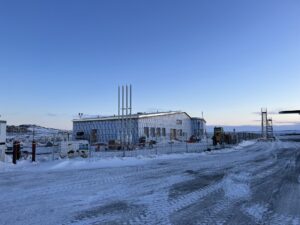
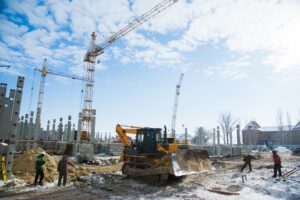
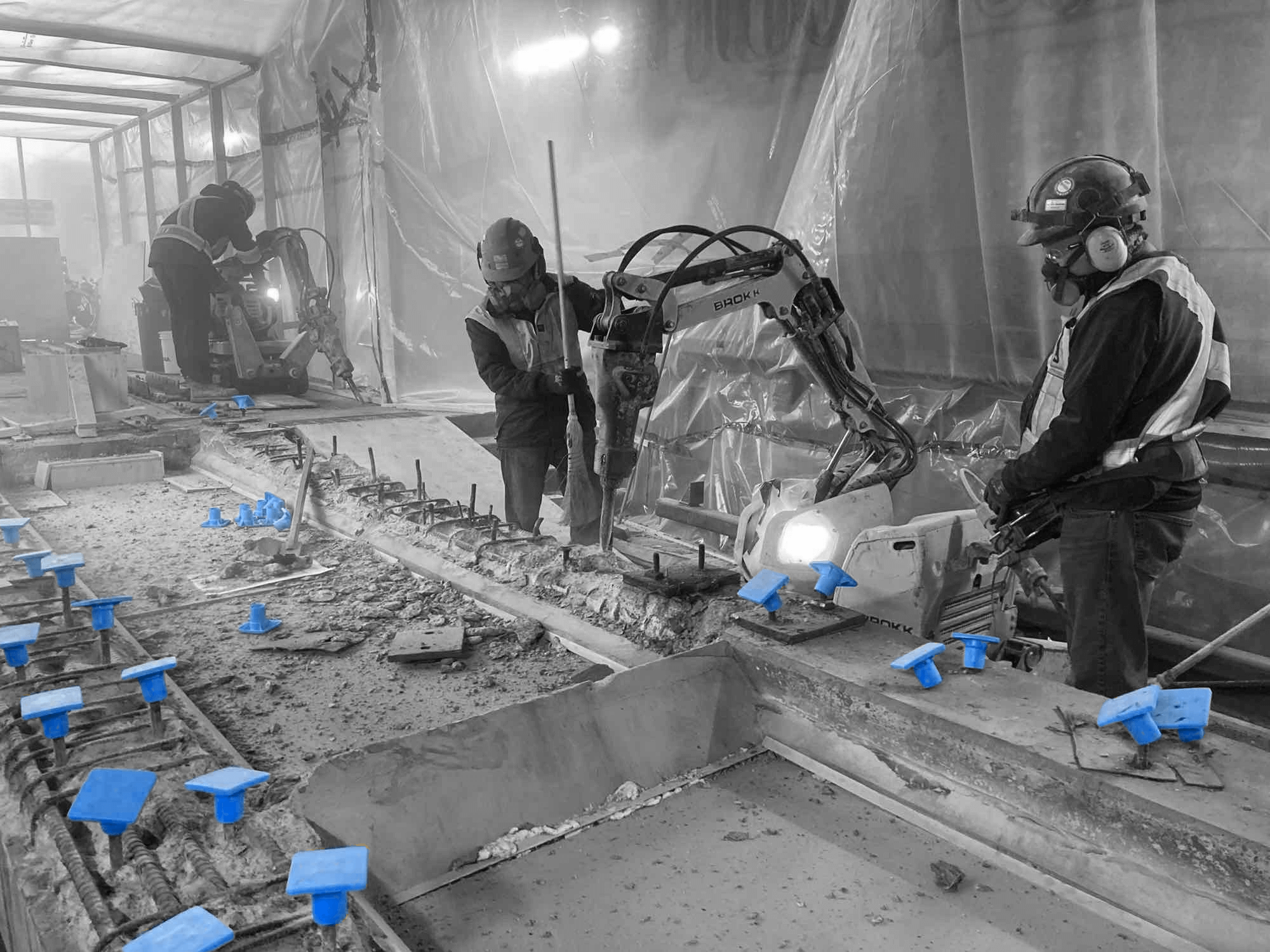
Industrial facility upgrades are not the same as greenfield construction. On an active site, construction teams are working around live processes, operating staff, existing utilities, restricted access areas, and production-critical systems. That changes everything from sequencing to safety controls.
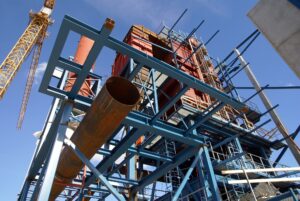
In these environments, even relatively straightforward scopes can become complex. A pipe replacement may require temporary bypass systems. A structural modification may need to be coordinated around crane access, operating clearances, and shutdown windows. Electrical or control upgrades may need phased commissioning to avoid process interruptions.
This is where an integrated delivery model matters. A contractor with experience in EPC and design-build services can align engineering, procurement, construction, and commissioning around the realities of an active plant. That reduces handoff risk and improves decision-making when field conditions change.
Industra’s brand approach emphasizes single-source accountability, in-house expertise, safety-first delivery, and quality at every step, all of which are especially important in live industrial environments.
The Real Risks of Poorly Planned Facility Upgrades
When upgrades are planned in isolation from operations, the consequences can extend well beyond schedule impacts.
Common risks include:
- Unplanned downtime caused by incomplete tie-in planning
- Safety incidents related to overlapping operations and construction activities
- Damage to existing systems during demolition, excavation, or installation
- Procurement delays that extend outage windows
- Commissioning issues caused by poor coordination between disciplines
- Reduced product quality or process instability during changeover
- Environmental non-compliance if temporary systems are not properly managed
These issues are rarely caused by a single mistake. More often, they result from incomplete front-end planning, fragmented responsibilities, or a contractor that lacks experience in operating industrial facilities.
A more effective approach starts with understanding how the facility actually works day to day. Construction planning must be built around operations, not the other way around.
Start With Early Operational Risk Planning
The most successful industrial upgrades begin long before crews mobilize to site. Early planning should focus on identifying operational constraints, critical assets, shutdown dependencies, and risk points that could affect production.
This includes:
- Mapping process-critical systems and interfaces
- Identifying equipment that cannot be taken offline
- Confirming available shutdown windows
- Reviewing maintenance schedules and operational peaks
- Assessing access, laydown, and material handling limitations
- Establishing isolation and lockout requirements
- Evaluating temporary works, bypasses, or redundant systems
At this stage, owner operations staff, maintenance personnel, engineers, and constructors all need to be involved. That cross-functional planning is one of the biggest differentiators between a smooth upgrade and a disruptive one.
This same planning discipline is one reason integrated delivery performs well on complex infrastructure work, as discussed in our blog on why in-house engineering matters on complex design-build projects.
Break the Work Into Phased, Manageable Packages
Trying to complete a major upgrade in one large campaign often creates unnecessary risk. In many cases, the better solution is to divide the work into smaller, coordinated phases that can be executed around plant operations.
A phased delivery model can allow owners to:
- Keep core systems online while adjacent work progresses
- Align high-risk tie-ins with planned outages
- Commission portions of the upgrade before the full project is complete
- Reduce congestion in active work areas
- Manage capital spending over multiple periods if needed
For example, a facility may phase civil work, structural modifications, mechanical installation, and controls integration so that each activity supports the next without putting unnecessary pressure on operations. Where possible, upgrades should be designed so new systems can be installed and tested in parallel before final cutover.
This approach is closely tied to effective process mechanical services planning, especially when facilities rely on continuous treatment, transfer, pumping, or process control.
Use Detailed Shutdown and Tie-In Planning
Every industrial owner understands that shutdown work carries a different level of urgency. Shutdown windows are usually short, expensive, and difficult to reschedule. If materials are missing, field measurements are incomplete, or crews are unclear on the sequence, the entire facility can feel the impact.
That is why shutdown planning must be treated as a dedicated workstream, not just a schedule note.
Strong shutdown planning typically includes:
Confirmed field verification
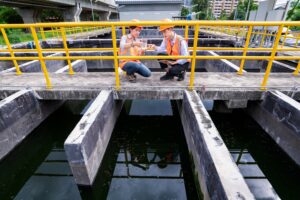
Existing facilities rarely match legacy drawings exactly. Site verification, scanning, and field measurements help reduce surprises before outage work begins.
Pre-fabrication where possible
Shop fabrication of pipe spools, skid elements, supports, and assemblies reduces site labour, shortens tie-in durations, and improves quality control.
Step-by-step outage sequencing
Crews need clear sequences for isolation, demolition, installation, inspection, testing, and startup. Roles and hold points should be defined in advance.
Contingency planning
If a tie-in exposes a hidden condition, the team must know how decisions will be made and who has authority to approve changes quickly.
This level of preparation supports schedule certainty and aligns with the quality-focused approach discussed in our blog on why quality planning matters more than speed in government-funded projects. The same principle applies in industrial facilities. Speed only matters if the work is planned properly.
Prioritize Safety in Every Interface Between Operations and Construction
In an active industrial environment, safety cannot be managed as a separate layer added after planning. It has to be built into the work from the beginning.
Industrial upgrades often involve:
- Live process areas
- Confined spaces
- Energized systems
- Heavy lifts
- Hot work
- Temporary isolations
- Working at heights
- Simultaneous operations
These conditions require careful coordination between operations and construction teams. Hazard assessments, permit systems, lockout procedures, access control, communication protocols, and emergency response planning all need to reflect the realities of both the plant and the upgrade scope.
This is where a contractor’s culture matters. Industra’s brand guidance makes it clear that safety is priority one and that Zero Harm 365 should be reflected consistently in messaging and delivery approach. That is especially relevant for active facility upgrades, where safe execution protects both project personnel and plant operations.
Owners looking at complex upgrade work should also consider a contractor’s broader Safety & Quality, including its approach to safety and quality assurance.
Coordinate Procurement Around the Operating Schedule
Procurement problems are one of the fastest ways to disrupt an industrial upgrade. Long-lead equipment, specialty components, controls hardware, valves, and fabricated items all need to arrive in sequence with the construction plan.
In operating facilities, delayed materials do not just create inconvenience. They can force schedule compression, extend shutdowns, or leave partially completed systems exposed.
A strong delivery strategy aligns procurement with:
- Confirmed outage dates
- Fabrication and testing timelines
- Storage and laydown constraints
- Site access limitations
- Required inspection and quality documentation
- Commissioning and startup requirements
This is another advantage of working with a contractor that brings engineering and construction together under one umbrella. Procurement decisions are easier to manage when the people designing the work and the people building it are coordinating from the start.
Self-Perform Capability Helps Reduce Interface Risk
Industrial facilities often involve multiple disciplines working in tight spaces and short timeframes. Every additional handoff between separate subcontractors increases coordination risk.
A multi-discipline, self-perform contractor can simplify delivery by directly managing core scopes such as:
- Civil and underground work
- Concrete and structural scopes
- Process mechanical installation
- Equipment setting
- Utility modifications
- General construction coordination
That matters because the biggest disruptions often happen at interfaces. If one contractor finishes late, another cannot start. If field conditions change, decision-making slows down. If responsibilities are fragmented, accountability becomes unclear.
This is one reason owners often seek contractors with integrated civil and industrial experience. It supports faster problem-solving and better control over quality, sequencing, and site safety.
Our earlier post on bridging the skilled trades gap: how self-perform contractors help future-proof projects speaks to the same advantage from a workforce and delivery perspective.
Plan Commissioning Before Construction Starts
Too many industrial upgrade projects treat commissioning as the last step. In reality, commissioning should be planned from the beginning.
That means confirming early:
- How systems will be tested
- What documentation is required
- Which operators need training
- What startup support will be on site
- How temporary systems will be removed
- What performance criteria must be achieved before turnover
In operating facilities, commissioning is often the most sensitive phase because it directly affects reliability, output, and operator confidence. A well-executed installation can still create disruption if startup is rushed or poorly coordinated.
Commissioning plans should be developed alongside construction sequencing so that every installation supports a smooth transition from old systems to new ones.
Communication Is What Keeps Disruption Low
In nearly every successful active-site upgrade, one factor stands out: disciplined communication.
Daily coordination between plant staff and construction supervisors helps teams manage access, sequencing, permits, hazards, and changing conditions in real time. Weekly look-ahead planning helps maintain alignment on outage windows, procurement status, inspections, and upcoming interfaces.
Clear communication matters most when conditions change. If a hidden utility is discovered, if an outage window shifts, or if production priorities change, the project team must be able to respond quickly without creating confusion on site.
This kind of transparency is central to client-focused project delivery and aligns with the same principles discussed in our blog on the value of client-focused construction management.
Industrial Upgrades Succeed When Construction Is Planned Around Operations
Industrial facility upgrades do not have to come at the cost of operational disruption. With the right strategy, owners can modernize facilities, improve reliability, and reduce long-term risk while keeping critical operations running.
The key is to treat the project as both a construction challenge and an operational continuity challenge. That requires early planning, disciplined sequencing, shutdown readiness, integrated safety systems, coordinated procurement, experienced field execution, and clear communication throughout delivery.
For industrial owners across Canada, the best results usually come from working with a contractor that understands live environments, can self-perform critical scopes, and brings engineering and construction together under one accountable team. Learn more about our experience in industrial markets, and approach to EPC design-build.
When upgrades are planned properly, facilities can move forward without unnecessary disruption, and owners can make critical improvements while protecting safety, production, and long-term performance.
For organizations preparing for an industrial upgrade, contact Industra to discuss how a safety-first, design-build, and self-perform approach can help deliver complex work in active operating environments.