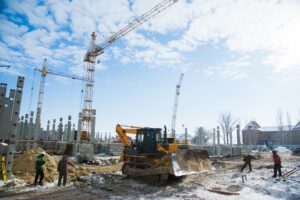
Construction does not stop when temperatures drop. Across British Columbia, Alberta, Saskatchewan, Manitoba, and the Northwest Territories, essential infrastructure projects continue through snow, frost, and extended periods of sub-zero weather. For municipalities, First Nations communities, industrial operators, and government agencies, delaying critical infrastructure work is often not an option.
Winter construction in Western Canada requires deliberate planning, disciplined execution, and a safety-first culture. It demands more than temporary heaters and insulated tarps. It requires integrated engineering, logistics coordination, and experienced field leadership.
At Industra, safety is priority one. Our Zero Harm 365 culture and in-house engineering teams allow us to plan and deliver complex infrastructure projects even in remote, cold, and logistically challenging environments. As a multi-discipline, self-perform general contractor serving industrial, First Nations, municipal, and institutional markets, we bring experience in remote, complex, and challenging environments across Western and Central Canada.
Understanding the Realities of Western Canadian Winters
Western Canada presents diverse but demanding winter conditions:
- Extended sub-zero temperatures
- Freeze-thaw cycles in coastal regions
- Heavy snowfall and drifting
- Limited daylight hours
- Frozen ground and frost penetration
- Remote access via winter roads or barge
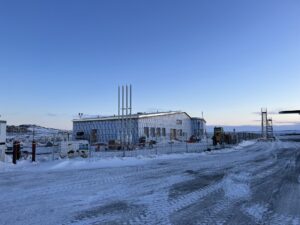
Northern and remote communities face even more constraints. Projects in fly-in-only or ice-road-access communities must align construction windows with logistics planning months in advance. Our experience delivering remote infrastructure, including projects highlighted in Solving Infrastructure Gaps in Remote Northern Communities and What Makes Remote Construction Schedules Succeed in Northern Canada, reinforces one reality: winter construction is successful only when planning begins early.
Winter should be viewed as a design and planning variable, not an obstacle.
Early Engineering Coordination Is Critical
Effective winter construction planning begins at the engineering stage. Integrated design-build teams are particularly well-positioned to address cold weather constraints because engineering and construction work in parallel.
Owners can learn more about this integrated approach in Why In-House Engineering Matters on Complex Design-Build Projects.
Key Engineering Considerations
- Frost Depth and Soil Behavior
- Frost penetration affects excavation depth
- Frozen soils change bearing capacity
- Frost heave can damage foundations
- Cold Weather Concrete Design
- Adjusted mix designs
- Accelerators where appropriate
- Temperature monitoring protocols
- Temporary Enclosures and Heating Loads
- Structural bracing for snow loads
- Fuel supply planning
- Ventilation and safety controls
- Material Selection
- Pipe materials rated for low temperatures
- Flexible joints for freeze-thaw cycles
- Coatings and membranes compatible with cold application
When engineering teams understand winter constraints early, schedules and budgets are realistic. This reduces risk and improves certainty for municipal and public-sector clients.
Safety First: Winter Hazards and Mitigation
Cold weather introduces additional safety risks. Safety is not seasonal. It must remain consistent, structured, and proactive.
Our broader safety philosophy is detailed in Why Safety Performance Is a Leading Indicator of Project Success and supported through our Safety & Quality program.
Common Winter Construction Hazards
- Slips and falls on ice
- Cold stress and frostbite
- Reduced visibility
- Equipment malfunctions in extreme cold
- Increased manual handling risks due to bulky PPE
Mitigation Strategies
- Daily hazard assessments specific to weather conditions
- Heated break areas and structured warm-up rotations
- Clear snow removal protocols
- Ice control programs
- Cold-weather PPE policies
- Equipment maintenance tailored to winter operation
Zero Harm 365 means every task begins with planning. Winter work requires detailed job hazard analyses and active supervision to ensure safety protocols are consistently applied.
Cold Weather Concrete Placement
Concrete placement during winter is one of the most technically sensitive aspects of infrastructure construction.
Municipal clients investing in water treatment plant construction, wastewater treatment upgrades, or reservoir replacement projects should understand that improper cold-weather concreting can compromise long-term durability.
Best Practices
- Pre-heating aggregates and water
- Insulated formwork
- Thermal blankets
- Enclosures with indirect-fired heaters
- Continuous temperature monitoring
- Controlled curing periods
Concrete must reach adequate strength before exposure to freezing conditions. This requires careful coordination between engineering, field crews, and quality control teams.
Our Quality Management Systems Matter in Public Infrastructure Construction article outlines how structured quality processes support durable outcomes.
Excavation and Underground Utilities in Frozen Ground
Frozen ground significantly affects excavation productivity and cost.
In many parts of Western Canada, frost depths can exceed one metre. In northern regions, permafrost adds additional complexity. Excavation planning must account for:
- Mechanical frost removal methods
- Ground thawing techniques
- Adjusted production rates
- Increased equipment wear
For projects involving municipal pump station construction or wastewater upgrades, winter tie-ins require careful scheduling to avoid service disruptions. Owners can refer to What Municipal Clients Should Know Before Starting a Pump Station Replacement for additional context.
Winter excavation is feasible, but only when realistic production assumptions are built into the schedule.
Logistics and Material Management in Winter
In urban areas such as Surrey, Kelowna, or Toronto, winter logistics involve snow clearing, traffic coordination, and material protection.
In remote and northern regions, logistics become exponentially more complex.
Our Remote Arctic expertise demonstrates that winter construction planning must include:
- Ice road delivery windows
- Barge scheduling before freeze-up
- Fuel storage planning
- Laydown yard preparation
- Weather contingency allowances
Prefabrication and modular construction can reduce field exposure time. Fabricating mechanical skids or building modules off-site allows installation to occur within shorter weather windows, improving both safety and schedule reliability.
This approach aligns closely with our integrated EPC and design-build delivery model.
Maintaining Schedule Certainty
Winter construction demands disciplined schedule management. Reduced daylight hours and slower production rates must be factored into baseline schedules.
Effective strategies include:
- Front-loading critical path activities before peak winter
- Sequencing interior mechanical work during extreme cold
- Using temporary structures to maintain productivity
- Incorporating realistic weather contingency days
Clients can explore how integrated project controls improve outcomes in The Role of Real-Time Project Monitoring in Delivering Government-Funded Projects.
When planning is thorough, winter does not automatically mean delay. It simply requires different sequencing.
Environmental Protection During Winter Construction
Environmental stewardship remains critical year-round.
In some cases, frozen ground can reduce soil disturbance and minimize environmental impact. However, winter conditions also present unique risks:
- Fuel spills on snow cover
- Limited visibility of environmental controls
- Frozen sediment control measures
Environmental Protection Plans must adapt to winter conditions. Industra’s commitment to environmental construction services includes:
- Secondary containment for fuel storage
- Regular environmental inspections
- Winterized erosion and sediment control
- Clear communication with environmental monitors
Clients can review related insights in Integrating Environmental Protection Plans into Active Construction Sites and Delivering Infrastructure Projects in Environmentally Sensitive Areas.
Winter conditions do not reduce environmental responsibility.
Supporting Northern and First Nations Communities
Many First Nations infrastructure projects occur in regions where winter dominates much of the calendar year.
Culturally respectful engagement, local workforce training, and logistical coordination are central to successful winter projects. Our Indigenous Affairs initiatives focus on:
- Local hiring and apprenticeship opportunities
- Coordinated planning with community leadership
- Infrastructure solutions tailored to community needs
Winter construction in small or remote communities must prioritize:
- Maintaining essential water and wastewater services
- Clear communication with residents
- Emergency contingency planning
Long-term partnerships strengthen trust and improve project outcomes.
Equipment Reliability in Extreme Cold
Equipment failures in winter can quickly disrupt productivity.
Cold weather affects:
- Hydraulic systems
- Fuel viscosity
- Battery performance
- Electrical systems
- Steel brittleness
Winter construction planning must include:
- Cold-rated equipment
- Preventive maintenance programs
- Backup equipment availability
- Heated storage where possible
Industra’s self-perform capabilities allow closer control over equipment condition and deployment, reducing reliance on third-party availability during peak winter periods.
Budgeting for Winter Construction
Owners should understand that winter construction may increase certain cost categories, including:
- Heating and enclosure systems
- Snow removal
- Reduced production rates
- Additional quality control monitoring
- Fuel consumption
However, winter work can also offer advantages:
- Reduced competition for skilled trades
- Schedule continuity
- Early completion ahead of peak construction season
Lifecycle performance remains the priority.
Why Design-Build Strengthens Winter Project Delivery
Winter construction amplifies coordination challenges. Design-build delivery reduces fragmentation.
As explained in Why Water and Wastewater Projects Deserve a Design-Build Approach and Best Practices for EPC Design-Build in Complex Projects, integrated teams provide:
- Faster decision-making
- Reduced RFIs and change orders
- Clear accountability
- Streamlined communication
When engineering and construction teams collaborate daily, winter adjustments can be implemented quickly and safely.
Single-source accountability matters most when conditions are unpredictable.
Planning Checklist for Winter Construction Projects
For municipalities, First Nations governments, and industrial clients planning winter work, consider the following checklist:
Pre-Construction
- Engage contractor early
- Review frost depth and soil data
- Confirm cold-weather concrete plan
- Develop winter-specific safety program
- Validate environmental controls
- Secure long-lead materials
During Construction
- Monitor weather daily
- Conduct frequent safety briefings
- Track concrete curing temperatures
- Inspect temporary heating systems
- Maintain clear access routes
Post-Construction
- Verify curing compliance
- Inspect for freeze-related defects
- Confirm commissioning under operational conditions
Structured planning protects quality at every step.
Delivering Reliable Infrastructure Year-Round
Western Canada’s climate demands resilience, discipline, and technical competence. Winter construction is not simply about enduring cold temperatures. It is about engineering for them, planning for them, and managing them safely.
Industra is a client-focused, performance-driven EPC contractor serving Western Canada. We bring experience in remote, complex, and challenging environments, supported by in-house engineering, multi-discipline self-perform capabilities, and a safety-driven culture grounded in Zero Harm 365.
Whether delivering water treatment plant construction, wastewater treatment upgrades, municipal utilities, industrial construction services, or remote Arctic infrastructure, our approach remains consistent:
- Safety is priority one
- Quality at every step
- Thorough planning before execution
- Respect for communities and environments
Winter conditions do not change our standards. They reinforce them.
If you are planning infrastructure work during winter months, early coordination is essential. Our team works closely with municipalities, First Nations, industrial operators, and government agencies to develop practical, safe, and realistic winter construction strategies.
Contact Industra to discuss your upcoming project and explore how our design-build and EPC expertise can support reliable delivery in Western Canada’s most demanding environments.